

Keep More Contractor Leads Moving Toward a Yes
Lead nurture for contractors is a simple system for staying useful after an inquiry, site visit, or estimate, until the customer is ready to decide. Start with a named owner for every lead, keep the original source and estimate ID attached, then use short automated emails to prompt the next step.
A practical sequence might include:
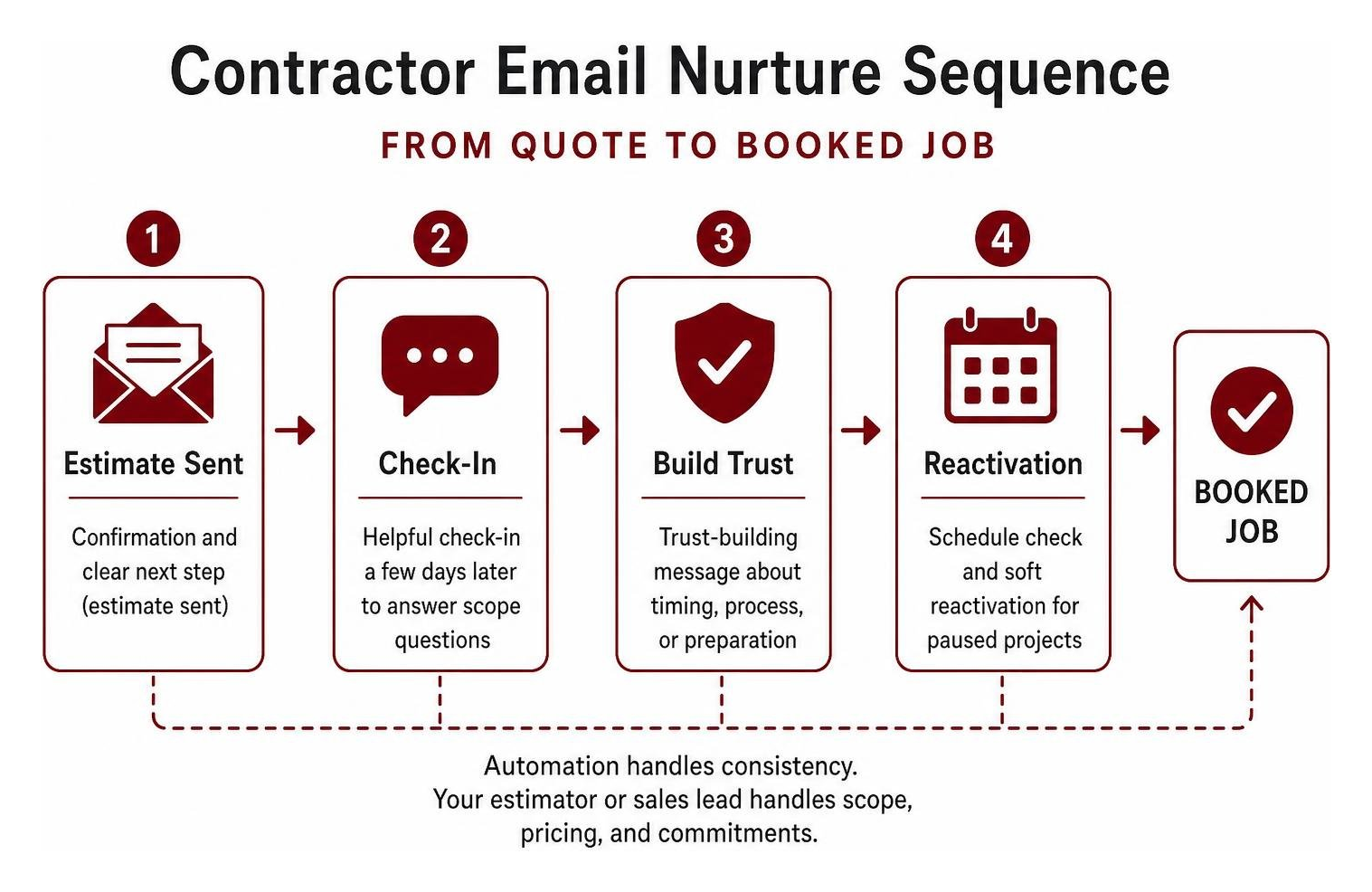
- A confirmation and clear next step when the estimate is sent.
- A helpful check-in a few days later to answer scope questions.
- A trust-building message about timing, process, or preparation.
- A schedule check and a gentle check-in to see whether a paused project is ready to restart.
The goal is not to badger people into buying. It is to prevent good opportunities from vanishing because someone followed up once, got busy on a job, and forgot the conversation. Automation handles consistency; your estimator or sales lead handles scope, pricing, and commitments.
For growing contractors, that distinction matters. Your pipeline is the set of potential jobs your team is working to win. A pipeline full of untracked quotes is not a pipeline. It is a pile of expensive maybes. The right nurture process protects lead source data, honors customer consent, connects the estimate or bid to the customer relationship management (CRM) record, where your team tracks the customer’s details and follow-up history, and alerts a human when a prospect responds.
The OODA Group helps contractors build the marketing systems behind dependable demand, including advertising on ChatGPT, so attracting new inquiries and following up on them work together instead of leaking revenue between the quote and the booked job.
I’m Eric Turner, and in this guide, I’ll show you how to build a nurture system that stays personal, measurable, and useful through long construction sales cycles, the time between an inquiry and the customer’s decision.
The Cost of the “Quote and Ghost” Cycle in Contracting
If you’ve sent a quote and heard nothing back, you know the sinking feeling of the quote and ghost cycle. You drive across town, climb into an attic, inspect a roof, or walk a commercial floor plan. You spend two hours calculating materials and labor, build a clean proposal, email it to the client, and then silence.

When prospects go quiet, they may still be considering your quote. Customers planning remodels, tenant improvements, roofing, or mechanical work may need time to compare bids and sort out timing. Homeowners balance financing or family schedules; commercial boards wait for monthly meetings.
Life can get in the way of a decision. If your team relies on memory, the loudest inquiries can get attention while other open bids sit untouched. A prospect may then choose a contractor who stayed in touch.
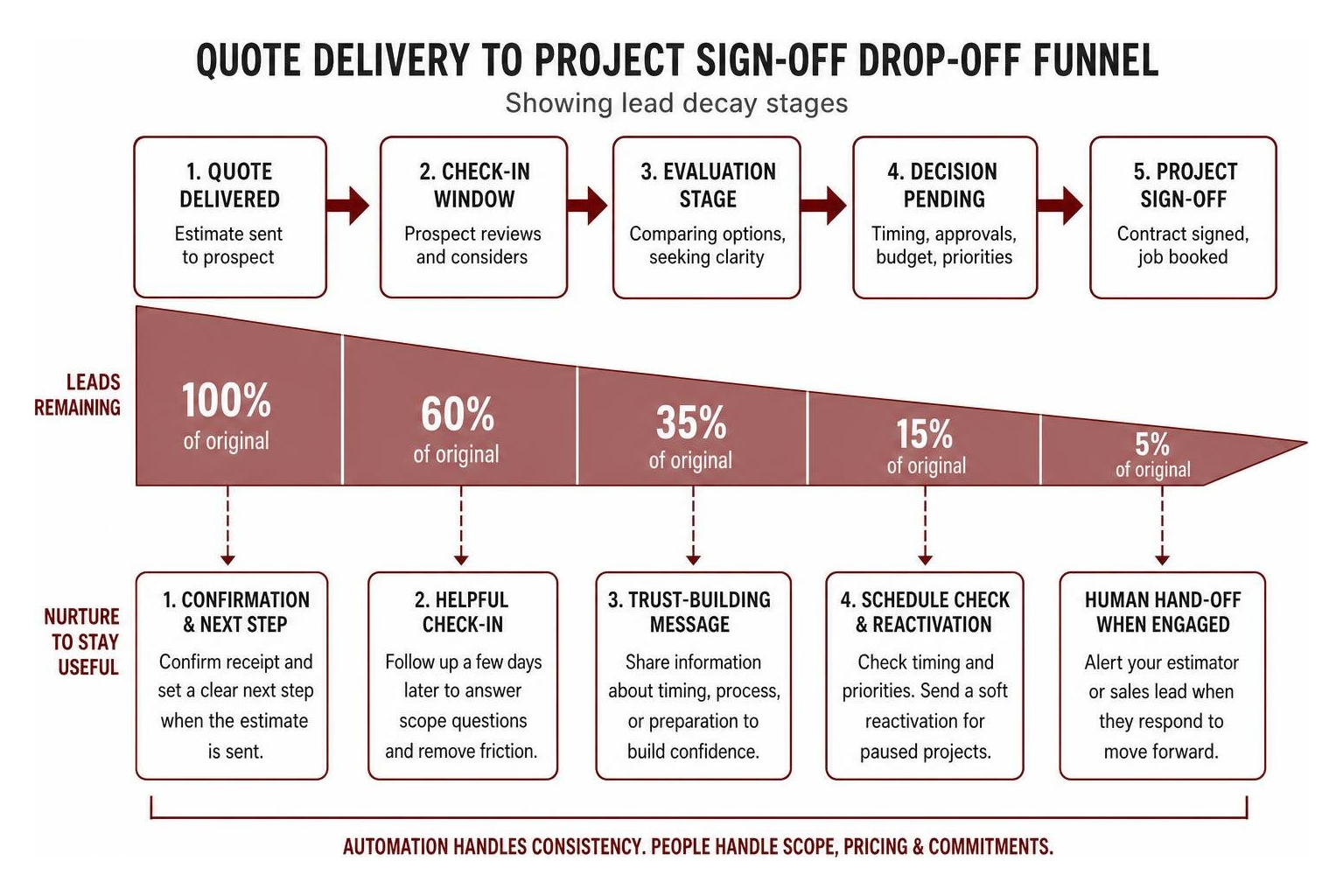
Manual follow-up can take time away from bidding work or running crews. For example, if finding estimates, drafting emails, and checking contact details takes 21 minutes per opportunity, a batch of 60 quotes takes 1,260 minutes, or 21 hours. Measure your own team’s time before estimating potential savings.
The Modern Framework for Lead Nurture for Contractors
A solid nurture framework is not an aggressive automated blast. It is a set of rules for recording where each inquiry came from, staying in touch while customers decide, and leaving pricing and commitments to your team.
Why Warm Construction Quotes Go Cold in 2026
Three common follow-up problems can let warm leads go cold:
- Single-touch follow-up: Sending the quote, asking “did you get this?” two days later, and never reaching out again.
- Scattered lead ownership: Nobody knows whether the estimator, project manager, or office coordinator is responsible for the next call or email.
- Missing context: When an estimator finally calls three weeks later, they forget the client’s timeline, preferred materials, or problems the project needs to solve.
Check whether each open opportunity records its original lead source and links its estimate request to the CRM record. Set a follow-up schedule and use automation to send the planned check-ins.
| Follow-Up Approach | Administrative Burden | Lead Source Tracking | Estimate Linkage | Follow-Up Consistency |
|---|---|---|---|---|
| Manual Follow-Up | Measure time spent finding estimates and writing messages | Depends on staff recording the source | Depends on staff linking the estimate | Depends on reminders and assigned ownership |
| Automated Lead Nurture | Requires setup, monitoring, and maintenance | Can preserve the source when configured and checked | Can link estimates when records are set up and the software tools are connected | Scheduled messages, with reply pauses and delivery checks |
Fix the follow-up gap with a system that schedules useful check-ins and gives your office staff a clear list of replies to handle.
Essential Workflow Stages in Lead Nurture for Contractors
A starting sequence for open estimates might run for 30 days; adjust the timing to the customer’s project and decision process. Using dynamic placeholders, fields the software fills with each customer’s first name, project type, or estimate reference ID, automated emails should feel like personal notes from the estimator.
- Day 0 (Estimate Delivered): Confirm delivery, provide a brief summary of the proposed scope, and clearly outline the next step.
- Day 3 (Clarification Prompt): Send a short email asking if any line items in the scope need clarification.
- Day 7 (Confidence Builder): Share a short case study, before-and-after photo set, or an explanation of your material warranties.
- Day 14 (Schedule Check): Update the prospect on upcoming crew availability or seasonal production schedules.
- Day 30 (Soft Reactivation): Check in to see if the project was postponed, completed, or adjusted, giving them an easy off-ramp or re-entry point.
To run these sequences reliably, many trade businesses lean on targeted automated contractor email campaigns to keep open bids warm while field teams focus on active installations.
Balancing Automated Workflows with Human Estimator Oversight
Automation should never calculate pricing, modify scope, or accept contracts. Software delivers the message; human estimators own the commercial relationship.
A critical rule in any contractor pipeline is the reply-pause trigger. The moment a client responds to an automated email, the sequence must instantly halt and create an urgent notification for the assigned estimator. This pauses scheduled check-ins and alerts the estimator to take over. Assign a backup so replies do not sit unattended while the estimator is on a job.
Combining disciplined workflows with well-planned contractor construction marketing strategies can help keep your messages consistent from the first inquiry through the proposal.
Building an Automated Nurture Engine That Protects Profit Margins
Sharing lead and job data gives marketing and operations a common view of upcoming work. Tracking open quotes and following up consistently can help you plan crew hours, anticipate equipment needs, and spot gaps in the schedule.
What to Measure and Who Is Responsible for Lead Nurture for Contractors
To evaluate your nurture engine, look beyond email open rates, which estimate opens but can include automated activity and do not tell you whether jobs were booked. Track core operational metrics that impact overhead and margins:
- Source Retention Rate: The percentage of leads that preserve their original lead source (search, local map listing, social ad, referral) through the signed contract. Target: 100%.
- Named Sales Ownership: Every lead must have a dedicated staff member assigned to avoid dropped handoffs. Target: 100%.
- Estimate and Bid Linkage: Ensuring customer relationship management (CRM) deal records link directly to estimating IDs and project files. Target: 100%.
- Stage Age: The average number of days a quote sits in “Estimate Sent” before moving to “Won,” “Lost,” or “Deferred.”
- Consent Rule Compliance: Recording clear communication permissions and honoring unsubscribe requests instantly across email and text messages (SMS).
Measure time spent on follow-up before and after changing the process. Treat administrative savings as a goal to test, not a promised result. These frameworks for following up on open bids offer a starting point for organizing the work.
Connecting CRM Records with Estimates, Bids, and Different Sources of Inquiries
Your email nurture engine works best when connected to broader marketing channels. Whether a prospect comes from paid ads across multiple online platforms or search engine optimization (SEO), record that source in the CRM. SEO means improving your website so it can appear in relevant unpaid search results.
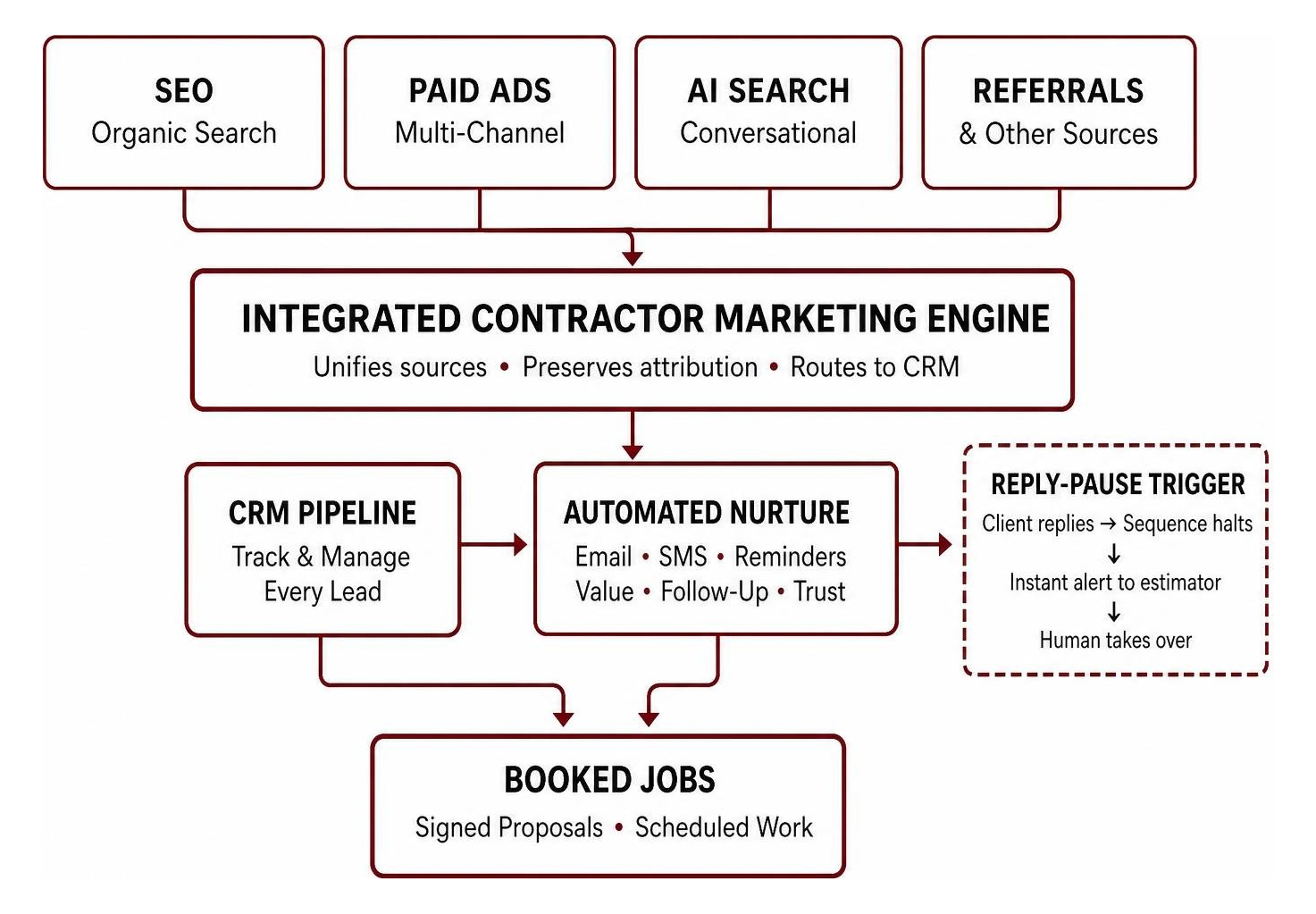
As consumer search behavior evolves, discovery includes conversational AI platforms. The OODA Group helps clients build coordinated marketing plans, including advertising on ChatGPT, with a plan for following up on resulting inquiries.
Start by assigning an owner for follow-up, checking estimate links, and testing what happens when a customer replies. If your team needs help leading that work, consider fractional CMO advisory for growth-focused contractors, part-time chief marketing officer support. Agree on responsibilities, costs, and measures of success before hiring.