

Home Services SEO That Brings in Calls, Not Just Traffic
Home services SEO works when it helps nearby homeowners find, call, and book your company. Start with a complete Google Business Profile, fast mobile service pages for the jobs you actually perform, consistent business details across local directories, and call tracking that connects search leads to booked work.
For a contractor, a first-page ranking is not the finish line. A pipe burst, failed AC unit, or broken garage door creates urgency. The homeowner searches on a phone, compares a few options, and calls the company that looks credible, local, and easy to reach.
That is why vanity traffic can be a costly distraction. You do not need more visits from people outside your service area or readers who will never hire you. You need visibility for high-intent searches, proof that your team is legitimate, and a way to see whether organic leads become estimates and dispatched jobs.
Many local searches happen on mobile devices, especially when the problem is urgent. If your website is slow, your phone number is hard to tap, or your Google Business Profile is incomplete, a ready-to-buy customer may simply call the next contractor.
This guide shows how to build and evaluate an SEO program by the outcomes that matter: qualified calls, booked jobs, and revenue.
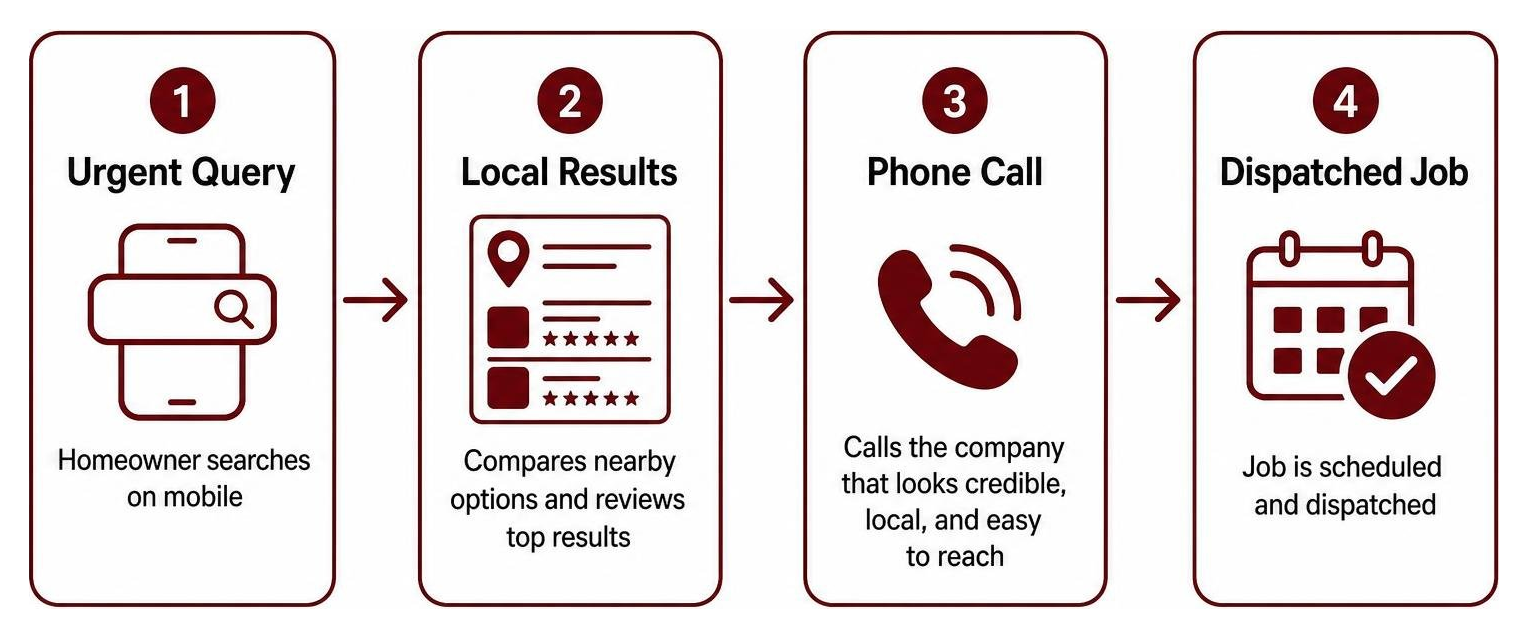
Core Pillars of High-Impact Home Services SEO
Ranking a trade business means showing up in two places that matter: the Google Local Map Pack and the standard organic results. When an air conditioner dies in the middle of summer, many homeowners start with the map listings, scan a few companies, and move fast.

Earning those spots requires a connected strategy across profile signals, site structure, and genuine local authority.
Local Search Foundations and Google Business Profile Optimization
Your Google Business Profile (GBP) is one of the most important assets for local visibility. For emergency services, some homeowners decide who to call directly from the map pack without ever clicking through to a website.
Optimizing your profile goes far beyond claiming the listing:
- Category Selection: Choose a hyper-specific primary category (e.g., HVAC Contractor instead of General Contractor). Add relevant secondary categories to capture adjacent work without diluting your primary focus.
- Visual Proof: Regularly upload photos of your real branded trucks, uniformed crew members, and completed projects. Real photos help homeowners see that you are active, local, and equipped for the work they need.
- NAP Consistency: Ensure your Name, Address, and Phone Number match down to the comma across your website, GBP, Apple Maps, Bing Places, Yelp, and major directories. Mismatched contact details can create trust issues and make it harder for customers to confirm they have found the right business.
- Systematic Review Generation: Fresh, specific reviews help homeowners compare contractors. Asking happy customers for feedback within 24 hours of job completion keeps recent examples of your work visible.
For trade companies managing extensive service areas, specialized contractor construction marketing ensures your geographic footprint matches where your crews actually work.
Technical On-Page Architecture for Home Services SEO
A search engine needs clear context to understand what services you offer and which ZIP codes you cover. Many trade websites struggle because they lump every service onto a single page or generate hundreds of thin, nearly identical city pages.
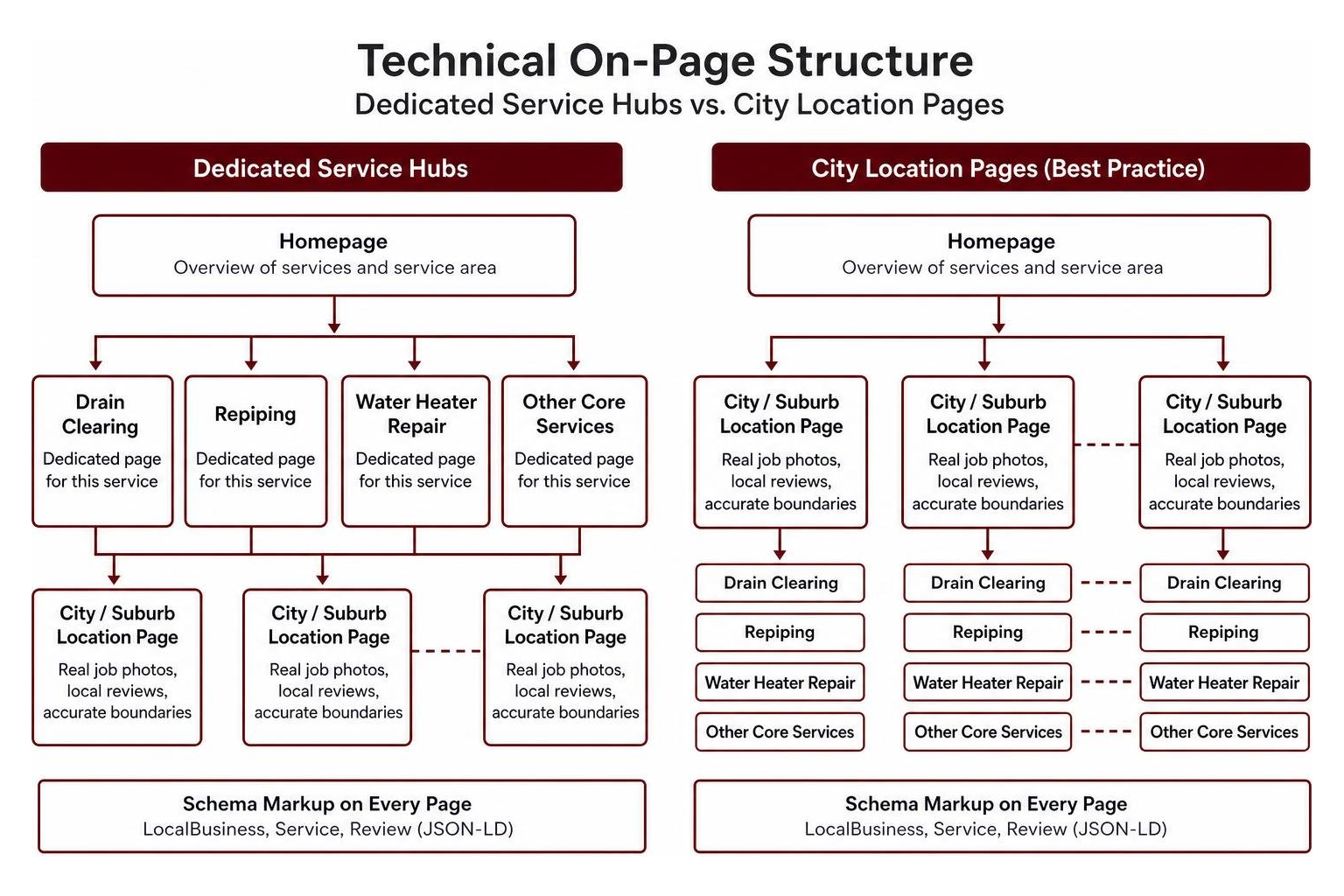
To avoid common on-page SEO mistakes, your website must rely on structured, human-first architecture:
- Dedicated Service Pages: Build a dedicated URL for each core service offering. A company offering both drain clearing and repiping needs unique pages for both rather than a single generic page.
- Validated Location Pages: Only build city pages for suburbs where you have genuine job density. Feature real job photos from that city, local reviews, and accurate service boundaries.
- LocalBusiness Schema Markup: Structured data (JSON-LD) translates your business details into clean code that search crawlers parse more easily. Implement
LocalBusiness,Service, andReviewschema on every core page. - Mobile Page Speed (Core Web Vitals): Your site cannot afford bloated code or oversized images. Compress photos, simplify scripts, and make the phone number obvious before a rushed homeowner starts comparing other contractors.
This structured setup forms the backbone of reliable plumbing marketing and high-intent HVAC marketing campaigns alike.
Conversion-Focused Content and Authority Link Building
Traffic does not pay the bills if your site fails to turn visitors into callers. Every service page should make the next step obvious: call, request an estimate, or schedule service.
High-converting pages combine helpful informational content with prominent trust signals:
- Problem-Solution Content: Homeowners search for symptoms before they search for replacements. Writing practical guides on strange furnace noises or water heater leaks captures early-stage demand and routes readers to your dispatch schedule.
- Seasonal Checklists: Publish spring AC tune-up checklists or pre-winter roof inspection guides to capture predictable seasonal demand spikes.
- Conversion Hooks: Place click-to-call buttons in a sticky mobile header, display license and insurance numbers above the fold, and embed authentic customer reviews next to your contact forms.
- Local Backlink Acquisition: Local backlinks can support your prominence in the markets you serve. Sponsor youth sports teams, partner with local supply houses, join local business chambers, and collaborate with local trade associations.
For high-ticket trades like roofing marketing, authentic local links can help establish credibility in markets where homeowners are comparing several contractors before making a large decision.
How to Choose Search Partners and Track Real Revenue
Most home service business owners have been burned by marketing reports full of keyword impressions and raw traffic. Those numbers are not useless, but they are not the scoreboard. When evaluating how to execute your SEO, compare the options based on how clearly they connect activity to booked work:
| Dimension | In-House Execution | Generic Digital Agency | Trade-Focused Search Partner |
|---|---|---|---|
| Primary Focus | Managing internal staff | Traffic volume & rankings | Qualified leads, booked jobs, and revenue visibility |
| Trade Knowledge | High internal familiarity | Varies; may rely on broad templates | Should understand service areas, seasonality, and dispatch workflows |
| Tooling Costs | SEO, call tracking, and reporting tools are separate costs | Often included in flat fees | Should be clearly disclosed in scope and reporting |
| Contract Terms | Direct payroll overhead | Often 6–12 month retainers | Should be reviewed for flexibility, ownership, and exit terms |
Vetting In-House Teams vs Specialized Home Services SEO Agencies
Deciding whether to hire an in-house marketer or partner with an agency comes down to operational bandwidth and technical depth.
Building an internal marketing team gives you direct daily control, but it requires significant overhead. You need to supply SEO tracking tools, call attribution software, schema developers, and ongoing training to keep up with search changes.
Working with an outside team gives you access to experienced specialists, but generic agencies often treat contractors like e-commerce brands. When reviewing options across different home services industries, verify that your prospective team understands seasonal demand, dispatch software, and lead-to-booking ratios.
If you choose to outsource, ask whether the provider’s SEO services include clear ownership of your website assets, transparent reporting, and a practical plan for turning local visibility into booked work.
Call Tracking and Revenue Metrics That Actually Matter
If your search reporting cannot show which pages and search themes are driving qualified calls, your marketing dollars are harder to manage.
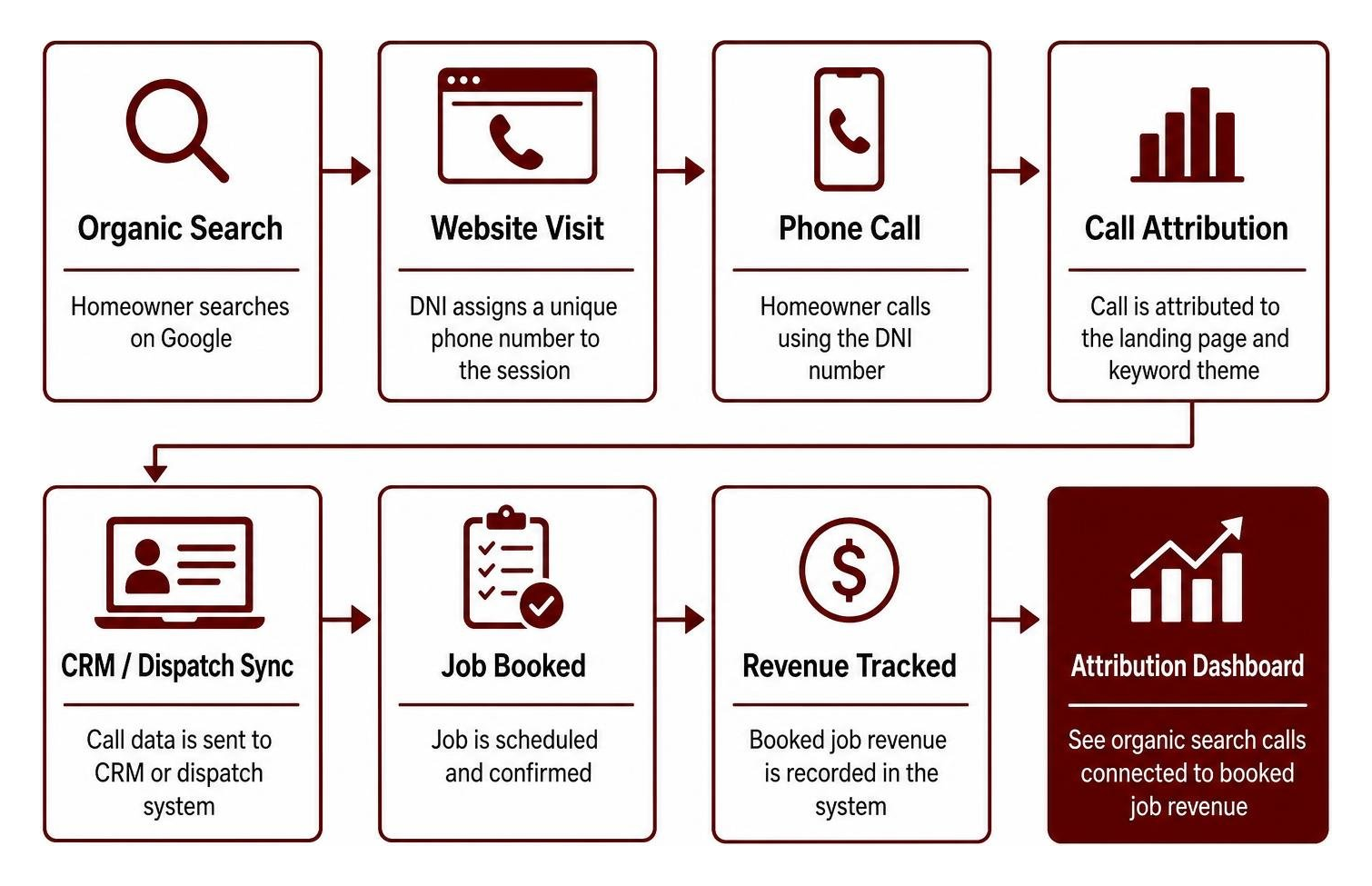
Modern campaign tracking often relies on Dynamic Number Insertion (DNI). When a homeowner visits your site from a Google search, DNI assigns a unique phone number to their session. When they call, the system can attribute that conversation back to the landing page, channel, and keyword theme that brought them in.
Connecting call-tracking tools directly to your CRM or dispatch software, like ServiceTitan or FieldEdge, changes the conversation from vague traffic updates to useful business questions:
- Vanity Metric: Ranking #2 for emergency pipe repair.
- Real Metric: How many organic calls came in, how many were qualified, how many booked, and how much revenue those jobs produced.
Treat your search presence as a durable business asset. Review calls, form fills, booked jobs, and closed revenue every month. If a page brings in calls that never book, fix the offer, service area, pricing context, or call handling. If a page brings in profitable jobs, strengthen it with better photos, clearer proof, and tighter calls to action.